


Quick Summary
- The Culture: Parades and festivals fill the calendar all year. Locals will tell you to keep a costume closet, and they aren't joking.
- Neighborhoods: The feel and the price tag can change within a few blocks here, so pick your area before you pick your house.
- Cost of Living: Housing costs less than most big American cities. Insurance premiums and summer power bills claw back a good chunk of that savings.
- Getting Around: Streetcars and bikes are popular, and locals give directions using the river instead of a compass. Watch out for potholes.
New Orleans has a way of ruining other cities for you. The food is worth the move on its own, the architecture is 200 years old in places, and there's live music on a Tuesday night if you want it.
There is a challenging side to living here too, and you'll be better off knowing about them going in. Let's walk through what daily life looks like here.
Welcome to New Orleans
New Orleans sits in a bowl between the Mississippi River and Lake Pontchartrain, and that geography shapes almost everything about living here.
- Population: Roughly 360,000 in the city proper, with about 1.2 million across the wider metro area.
- Parishes: Orleans Parish is the city itself. Jefferson, St. Bernard, and St. Tammany parishes make up most of the surrounding suburbs.
- Economy: The Port of New Orleans, tourism and hospitality, healthcare, energy, and a growing film industry.
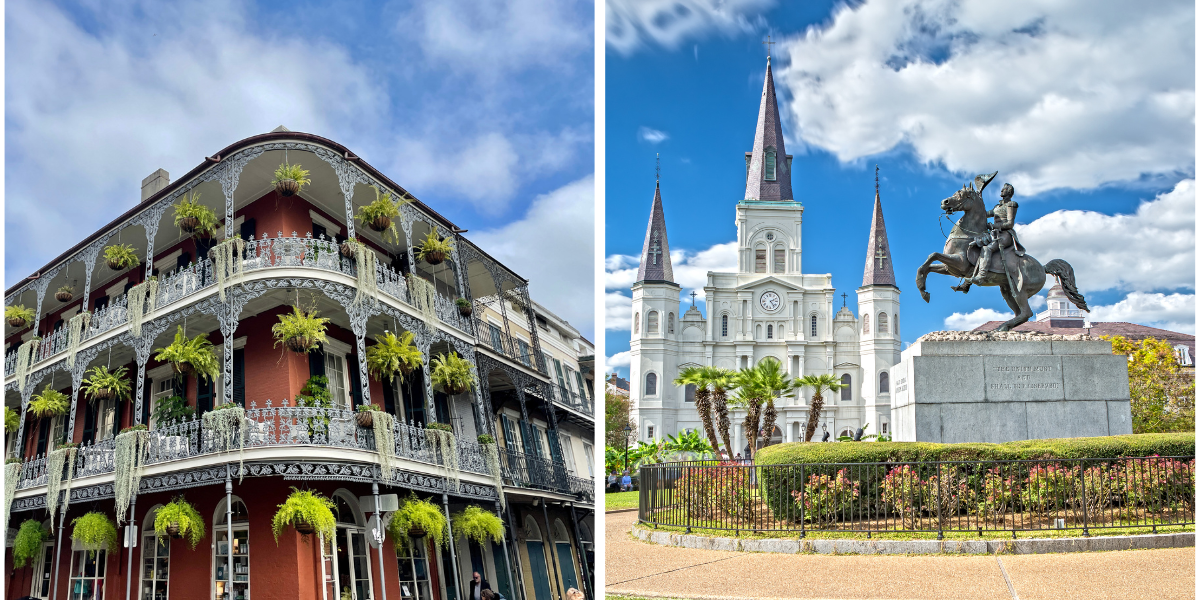
- Landmarks: Jackson Square, City Park, the Superdome, and the St. Charles streetcar line rolling under the oaks.
- Weather: Long humid summers and short mild winters, plus a hurricane season that runs June through November.
- Food: Gumbo, po'boys, crawfish boils, beignets, and some of the best restaurants in the South at every price point.
The Job Market & Price of Living in New Orleans
The cost of living in New Orleans is reasonable by big-city standards, but wages are lower than a lot of places people move from, and the job market is thinner than in a comparable metro.
Most local advice boils down to the same thing: line up work before you move. The biggest employers include Ochsner Health, Tulane University, Entergy, the Port of New Orleans, and Lockheed Martin. Hospitality and healthcare hire steadily. Outside those sectors, the search can take a while.
The median household income sits somewhere around $55,000 to $57,000, which is below the national figure. That gap is the single biggest thing to plan around.
What Housing Actually Costs
Housing is where New Orleans looks like a bargain. The median home sale price landed around $354,000 in mid-2026, well under the national median of roughly $410,000. The market isn't especially competitive either, with homes sitting about 75 days before they sell.
Rent tells a similar story. The average apartment rents for about $1,386 a month, which is below the national median, and rents actually dipped slightly over the past year. A one-bedroom runs closer to $1,250.
Insurance and the Real Cost of Living in New Orleans
Now the part that catches people. Homeowners insurance in New Orleans is among the most expensive in the country. Estimates vary widely depending on your home's age, roof, and elevation, but expect to pay several times the national average of roughly $1,400 a year. Some homeowners in the metro pay $5,000 or more.
Flood insurance is a separate policy, and standard homeowners coverage won't touch flood damage. Premiums swing hard based on your address. A place in the French Quarter might pay a few hundred dollars a year while a home near the lake pays several thousand.
Renters feel this too, because landlords bake rising insurance costs into the rent. So when you're comparing an apartment here to one back home, add a mental cushion.
The good news is that utilities run about 27% below the national average, and gas is cheap. Your summer electric bill will still climb when the AC runs nonstop through August.
Most National Flood Insurance Program policies don't take effect for 30 days after you buy them. If you're closing on a house in May and hurricane season starts in June, that timing gets tight fast. Buy the policy early rather than at closing.
Finding Your New Orleans Neighborhood
New Orleans neighborhoods have more personality per square mile than just about anywhere. They also change character fast. You can walk six blocks and go from mansions to modest cottages to a stretch of warehouses.
Picking the right area matters more here than in most cities. The best areas to live in New Orleans depend almost entirely on whether you want walkability, a yard, good public schools, or a short commute, and you usually can't have all of them at once.
One thing worth noting: crime is a real consideration in New Orleans, and it varies block by block rather than neighborhood by neighborhood. Visit at different times of day, walk the street on a weeknight, and talk to people who live there. A local agent who works the area will give you a straight answer.
Uptown
Uptown runs along the river and includes some of the prettiest residential streets in the city. You get the St. Charles streetcar, Audubon Park, and the Tulane and Loyola campuses. It's popular with families and academics, and prices reflect that.
Garden District
This is the postcard version of New Orleans, with antebellum mansions and live oaks arching over the sidewalks. It's beautiful and it's expensive. Magazine Street runs right alongside it with shopping and restaurants.
Mid-City
Mid-City gives you more house for your money and puts City Park in your backyard. The Canal streetcar line runs through it, and Bayou St. John is a lovely place to spend a Saturday. It's become one of the more popular picks for people who want space without leaving the city.
Marigny & Bywater
Just downriver of the French Quarter, these two are where a lot of the creative crowd lands. Frenchmen Street has the music venues locals actually go to. Housing is colorful, historic, and often small, and the area has gotten pricier as more people discovered it.
Lakeview
Lakeview sits near Lake Pontchartrain and feels more suburban than most of the city. Much of it was rebuilt after Katrina, so the housing stock is newer and often elevated. Families like it for the space and the newer construction.
Gentilly
Gentilly is a solid pick for anyone who wants a single-family home with an actual yard while staying inside Orleans Parish. Prices are lower than Uptown or Lakeview, and it's convenient to both downtown and the lakefront.
Algiers Point
Algiers Point sits across the river, and residents commute in on the ferry with a skyline view. It's historic, walkable, and calmer than the neighborhoods on the other bank. Housing tends to cost less for what you get.
Metairie
Metairie is in Jefferson Parish, just west of the city line. You get suburban layouts, chain grocery stores, easy highway access, and schools that many families rate higher than their Orleans Parish options. The tradeoff is that it feels much less like New Orleans.
The Northshore
Across the Lake Pontchartrain Causeway, towns like Mandeville, Covington, and Slidell offer bigger lots, strong public schools, and a slower pace. Plenty of families make this trade. Just understand what the Causeway commute means, because that's 24 miles of bridge each way.
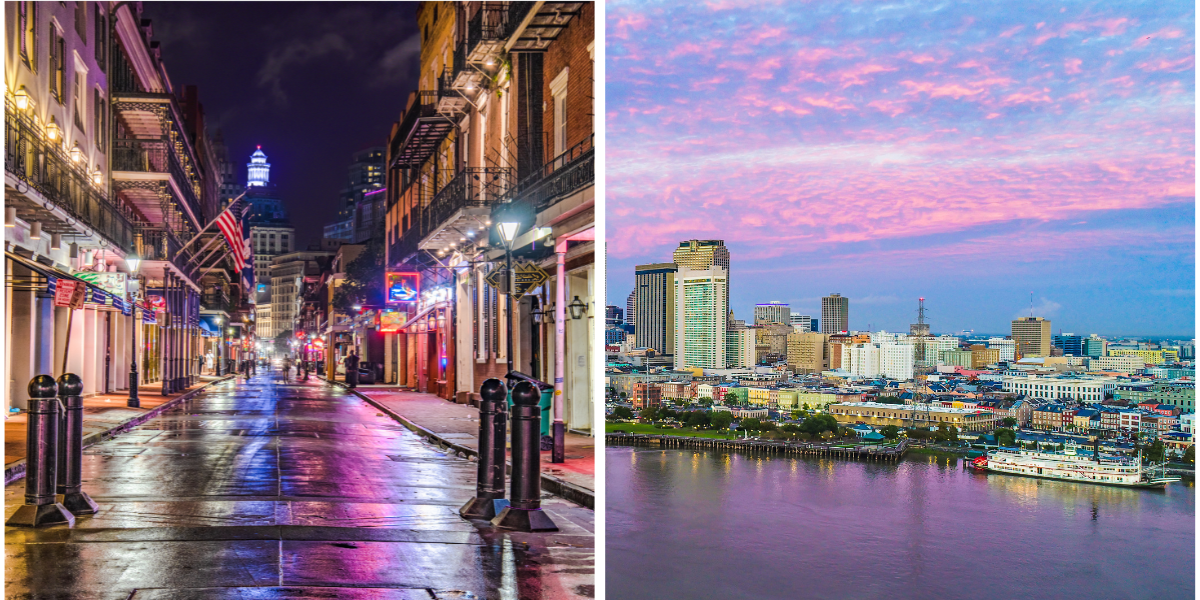
New Orleans doesn't use north, south, east, and west. The river curves too much for that to make sense. Locals say riverside and lakeside for the two main axes, and uptown and downtown for the other two. You'll hear this in directions, addresses, and traffic reports, so it's worth learning in week one.
Getting Around New Orleans
The city is flat and compact, which makes biking genuinely practical. Plenty of residents get around on two wheels most of the year, though summer heat and sudden downpours will test your commitment.
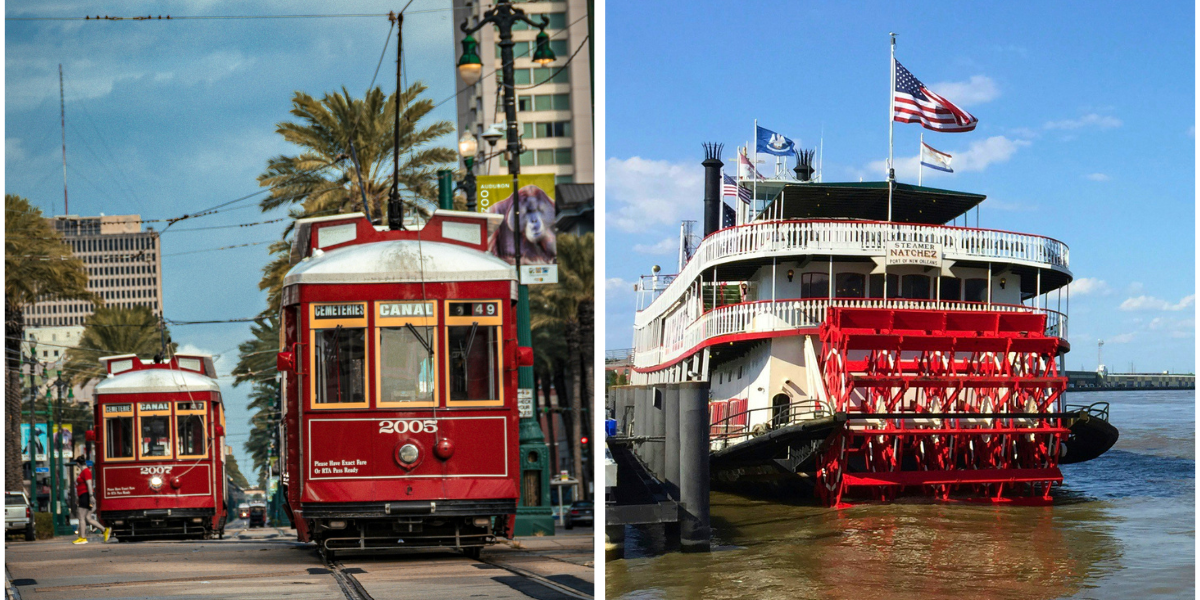
Streetcars run on four lines and are charming, useful, and slow. The RTA also runs buses. If you live and work along a streetcar route, you can lean on it. Otherwise you'll probably want a car.
Speaking of cars, budget for tires and alignment work. The potholes here are bad enough to be a real line item. Street flooding is also routine during heavy rain, so learn which underpasses fill up and avoid them.
For highways, you've got I-10 running through the middle, the Crescent City Connection crossing the river, and the Causeway heading to the Northshore. Traffic is manageable compared to bigger metros, but construction is constant.
Education, Healthcare & Local Life
New Orleans has an unusual school system, and it surprises most newcomers. Nearly every public school in Orleans Parish is a charter school, which means there's no traditional neighborhood-assignment district. Families apply through a centralized enrollment system called OneApp and rank their choices. It takes some getting used to, so start researching before you move rather than after.
Higher education is a strength. Tulane, Loyola, the University of New Orleans, Xavier, and Dillard all sit inside the city, and Xavier in particular sends more Black students to medical school than almost any other university in the country.
On healthcare, Ochsner Health is the dominant system in the region, with LCMC Health and Tulane Medical Center also serving the metro. LSU Health New Orleans and Tulane University School of Medicine both train physicians here, which means the city has more medical infrastructure than its size would suggest.
Then there's the social calendar, which is the part everyone underestimates. Mardi Gras is a season, not a day. Between krewe parades, Jazz Fest, French Quarter Fest, and neighborhood second lines most weekends, you'll have more to do than you have weekends.
A 2026 SmartAsset study on the salary needed to live comfortably ranked New Orleans second lowest out of 100 major U.S. cities for single adults. Only San Antonio came in cheaper. The catch is that local wages are lower too, so the comparison works best if you're bringing a remote job with you.
Hurricane Season & the New Orleans Climate
Hurricane season runs June 1 through November 30, and it's a normal part of life here rather than a constant emergency. Locals treat it like people elsewhere treat snow. You watch the forecast, you keep supplies on hand, and most years nothing much happens.
What you should do in your first month is figure out your evacuation route and know whether your address is in a flood zone. Look up your address on FEMA's Flood Map Service Center to find your flood zone, and read through the city's NOLA Ready hurricane guidance for evacuation planning. Ask about elevation when you're looking at houses.
Summers are the real daily challenge. It's hot and the humidity is heavy, with highs in the low 90s that feel considerably worse. Afternoon thunderstorms roll through most days and clear out just as fast.
Winter is the payoff. It's mild enough that people eat outside in January, and a hard freeze is rare enough to be news when it happens. Spring and fall are gorgeous, which is also when the festival calendar fills up.
Ready for Your Move to New Orleans, LA?
Here's something people don't think about until they're standing in the street with a rental truck. A lot of New Orleans housing predates cars entirely. The streets are narrow, driveways are rare in the older neighborhoods, and low oak branches hang over plenty of residential blocks.
Try parking a 26-foot truck on a Marigny side street and you'll understand quickly. Add in one-way streets, tight turns, and the fact that you're doing all of this in the heat, and a DIY move gets rough.
Portable storage in New Orleans solves the worst part of that. Go Mini's drops a container at your place, you load it on your own schedule instead of racing a rental clock, and we handle the driving and delivery to your new address. No wrestling a moving truck through the Quarter, and no circling the block hoping a spot opens up.
Need Moving Storage in New Orleans? Go Mini's serves the metro from our New Orleans location, and we've got a Baton Rouge branch if your move takes you up the river. Load at your pace and let us take care of the rest. Get your instant, no-obligation quote today!
Frequently Asked Questions
Is New Orleans a good place to live?
For the right person, absolutely. The food, music, architecture, and sense of community are hard to match anywhere in the country, and housing costs less than most major cities. The counterweight is a softer job market, lower wages, and infrastructure that has real problems. People who love it here tend to love it a lot.
Is New Orleans a safe place to live?
Crime rates in New Orleans run higher than the national average, and that's worth taking seriously. It's also very localized. Conditions vary block by block, and plenty of residents live here for decades without incident. Research your specific address rather than the neighborhood name, and visit at night before you commit.
What salary do you need to live comfortably in New Orleans?
A 2026 SmartAsset study put the figure around $84,000 a year for a single adult, which ranked second lowest among 100 major U.S. cities. For context, the local median household income sits closer to $56,000, so plenty of people live here on less than the "comfortable" benchmark.
Is living in New Orleans expensive?
It depends on what you're comparing it to. Housing and utilities come in below the national average, so day-to-day costs feel manageable. Insurance is the outlier. Homeowners premiums here rank among the highest in the country, and flood coverage costs extra on top.
How much money do you need to move to New Orleans?
Beyond normal moving costs, budget for a deposit plus first month's rent, and set aside money for insurance premiums that will likely run higher than you're used to. If you're buying, get insurance quotes before you make an offer rather than after, because the premium can change what you can afford.
Why are people moving out of New Orleans?
The city's population has declined in recent years, and the reasons come up repeatedly in local conversation: insurance costs, infrastructure problems including the drainage and water system, crime concerns, and a limited job market. It's a fair question to weigh, and the same city that some people leave is one others move across the country for.
What are the do's and don'ts of New Orleans?
Do learn riverside and lakeside. Do say hello to your neighbors, because that's genuinely expected here. Do keep costumes on hand. Don't plan on Bourbon Street being part of your regular life, because most locals avoid it. And don't skip flood insurance because your zone says low risk.


